Reading the Skies: A Field Guide to Weather as Omen in Canadian Fantasy
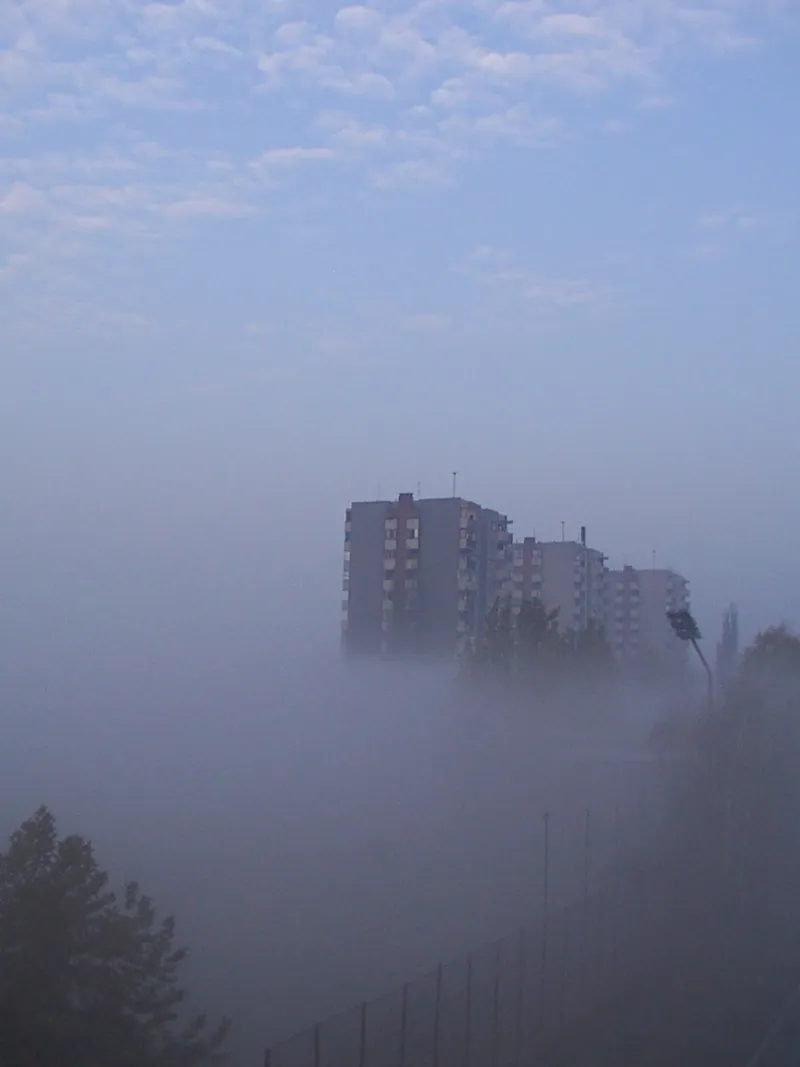
Photo: DiKadic, CC BY-SA 3.0, via Wikimedia Commons
Ask a reader from southern Ontario what they remember most vividly about their first encounter with Canadian fantasy, and the answer is often not a character or a creature. It is the weather. The mist that gathers over a paddock before something steps out of it. The lake-effect snow that buries a town in silence just as the story tips from the ordinary into the other. The unseasonable thaw that makes a child uneasy long before anything on the page explains why.
We are, as a country, a people who talk about the weather constantly — and it should surprise no one that our fantasy writers have turned that small national habit into one of the genre's most supple tools. Weather in Canadian fantasy is seldom scenery. It is a dial, and someone is turning it.
The Forecast as Emotional Instrument
Consider how many foundational scenes in our literature begin not with a door or a mirror but with a shift in the air. Fog is the workhorse: it softens the edges of a familiar street until the familiar becomes negotiable. A character walking home through coastal mist on the Bay of Fundy, or through river fog along the St. Lawrence, is not merely experiencing an atmospheric nuisance. The fog is doing narrative work — obscuring the boundary, suggesting that the world next door has drifted closer than usual.
Snow performs a different function. A heavy snowfall isolates; it slows time; it makes a house the only sure place on earth. When a storm closes in around a farmhouse or a cottage in the woods, the story gains permission to become interior, dreamlike, uncanny. And the thaw — that peculiar Canadian event, the January melt that fools everyone — is perhaps our most ominous weather of all. A thaw out of season suggests that something has gone wrong with the order of things. In fantasy, wrongness of season is rarely accidental. It is a warning.
A Reader's Forecast Guide
For readers who wish to sharpen their instincts, a rough field guide:
Fog. Expect a threshold. If mist gathers in the early chapters, someone will cross over — or something will come through. Fog is the genre's curtain.
Lake-effect snow. Expect isolation and revelation. Communities cut off by storm are communities where secrets surface. Watch the housebound characters; the storm will out them.
The unseasonable thaw. Expect imbalance. When winter loosens its grip too early, the otherworld is leaking. Whatever the plot has been suppressing is about to melt through.
Wind off the water. Expect a message. In a country defined by three coasts and a quarter of the world's freshwater, wind arriving over water is how news — human and otherwise — travels.
The sudden stillness. Expect the worst. The hush before weather, that flattened, pressurized quiet, is our literature's most reliable signal that the ordinary world is holding its breath.
Why It Works Here
One could argue this is simply good craft, and it is. But there is something distinctly Canadian in the technique. Our weather is genuinely dangerous; our landscapes genuinely vast; our settlements genuinely small against both. A writer does not have to exaggerate much to make a storm feel like a boundary event. The naturalism is already there, waiting to be tilted a few degrees toward the marvelous.
There is also, I suspect, a cultural logic at work. Canadian fantasy has always favoured the quiet crossing over the thunderous one — the everyday portal, the modest encounter. Weather suits that temperament perfectly. It is not a thunderous intrusion; it is a gradual accumulation, a change in conditions. The otherworld arrives the way a front arrives: first the light changes, then the air, then everything.
The Next Time the Sky Turns Strange
So the next time you are a chapter deep in a Canadian fantasy and the fog begins to thicken, or the snow begins to fall in June, pause a moment before reading on. Ask what the sky knows that the characters do not. Chances are the author has already told you — not in dialogue, not in narration, but in the oldest, most Canadian idiom available: the forecast.
In this country, we learned early that weather is never small talk. Our fantasy writers simply agreed, and made it mean something.