The Hardware Aisle as Grimoire: Where Canadian Main Street Keeps Its Magic
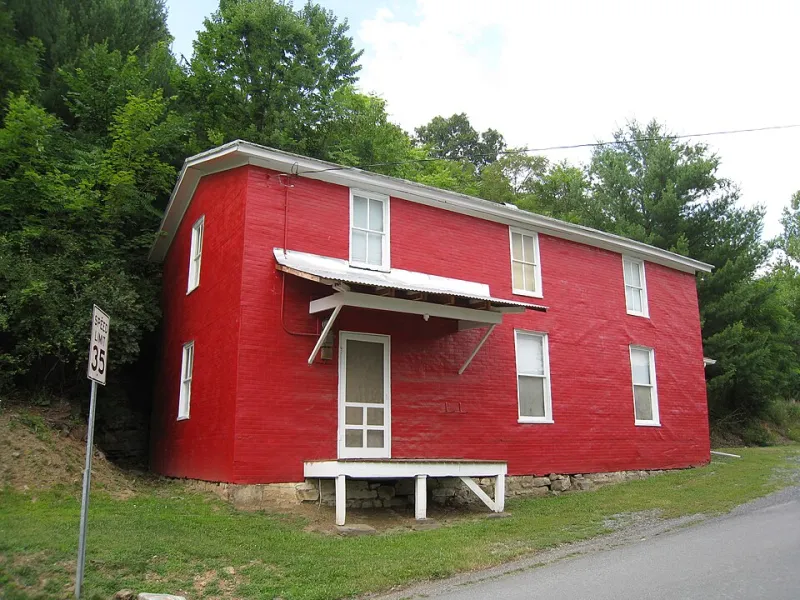
Photo: Justin A. Wilcox, Romney, West Virginia, United States, CC BY-SA 3.0, via Wikimedia Commons
Every fantasy reader knows the archetype: the dim shop with a bell over the door, the proprietor who knows more than they say, the shelf of objects that hum faintly when you walk past. It is a wonderful image, and it has been imported so many times from so many novels that it has worn smooth, like a stone carried in a pocket. But for writers working in the Canadian tradition — the tradition that finds the marvellous hiding inside the ordinary — the question worth asking is simpler and stranger: why are we inventing magical shops when Main Street already has them?
The General Store Was Never Only a Store
Consider what a rural general store actually is. It is a building where the necessities of survival are gathered under one roof and dispensed by someone who knows your name, your family, and probably your business. In communities from Muskoka to the Annapolis Valley, the general store has historically been the single point of contact between a household and the wider world — goods arriving by boat or by rail, news arriving by word of mouth, credit extended on trust.
Strip away the fluorescent lighting and you have the perfect fantasy provisioning station. The shopkeeper who trades in essentials is already a liminal figure: part merchant, part confessor, part gatekeeper. A character buying rope, matches, and salt before venturing into the bush is performing a ritual older than any spellbook. Writers need only tilt the frame a few degrees. The shelf of penny candy becomes a shelf of charms. The wall of mail slots becomes a cabinet of fates. The store's ledger, with its debts recorded in careful hand, becomes the kind of book no one should sign lightly.
The Hardware Counter: A Wizard's Supply Closet in Plain Sight
If the general store provisions the quest, the hardware shop equips it. Anyone who has stood at the counter of a small-town hardware store — the kind where fasteners live in wooden drawers and the staff can identify a bolt from a verbal description — knows the feeling of entering a place of deep, specific knowledge. These are buildings organised by function and remedy: this aisle for what binds, that one for what cuts, that corner for what adheres.
It takes very little to make the leap. A hero in search of a way to seal a door against what follows her will find, at a genuine hardware counter, hinges, hasps, weatherstripping, and locks — an entire practical grammar of keeping things out. Candles, cord, lanterns, iron fittings, salt blocks for the cattle: the traditional toolkit of folk magic is stocked in full, honestly labelled, and priced by the unit. The comedy and the horror both write themselves. So does the wonder. There is something quietly marvellous about a place where a person can walk in with a problem and walk out with the exact object that solves it, explained by someone who has used it themselves.
The Antique Shop: Retail as Haunting
Then there is the corner antique shop, that fixture of every Ontario county town and every British Columbia village with a heritage main drag. Of all retail spaces, the antique shop is the one that has already done the fantasy writer's work. Its inventory is, by definition, objects with histories — items that belonged to someone, that outlived them, that carry the patina of use. Its organisation is irrational by modern standards. Its proprietor is often eccentric by profession. And its central transaction — a person paying money to take an old thing home — is the opening move of a hundred ghost stories.
The genre convention of the cursed object purchased from a mysterious dealer is simply the antique trade with the lighting adjusted. What Canadian fiction can add is the specificity of provenance: not a generic cursed mirror, but a memento from a Galt parlour, a ship's lantern from a Lunenburg chandlery, a treaty medal whose history the seller does not fully understand and perhaps should not. Objects in this country travel far and change hands reluctantly. That is atmosphere no imported grimoire can supply.
How to Spot the Threshold When You're Buying Milk
For readers as much as writers, the pleasure of this approach is that it retunes the eye. The signs are consistent once you know them:
- Irregular hours. Magic and small-town retail share a disdain for the schedule. A shop that opens when it opens exists slightly outside ordinary time.
- The proprietor's double knowledge. The best shopkeepers know two things at once: the price of everything and the story behind it.
- Stock that outlived its purpose. Fly reels in prairie towns, snowshoes in October, a barrel of odd bolts nobody has asked for since 1987 — objects waiting for the person who needs them.
- Credit and trust. Systems of exchange based on reputation rather than currency are the economic signature of the liminal.
An Argument for Staying Home
None of this is to say the candlelit arcane emporium should be retired. It is to say that Canadian fantasy possesses, in its own main streets, a ready-made vocabulary of enchantment that costs nothing to import and everything to notice. The general store, the hardware counter, and the antique shop are not backdrops. They are institutions built on scarcity, trust, and the long memory of objects — which is to say, on the same foundations as magic itself.
The next time a character in your imagination needs supplies for a journey, consider sending them not to a wizard's tower but to the store at the corner of the concession road, where the bell over the door still rings and the owner will ask, in a way that is both ordinary and enormous, exactly where you think you're going.