The 6:40 to Elsewhere: How Ordinary Transit Became Canadian Fantasy's True Quest
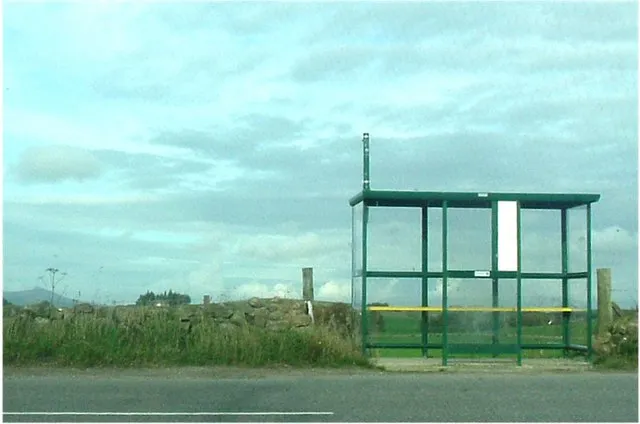
Photo: Stanley Howe, CC BY-SA 2.0, via Wikimedia Commons
There is a moment familiar to almost anyone who grew up outside a Canadian city: you are waiting, in the cold, for a bus that may or may not come, and the road stretching away in both directions holds nothing but snowbank, hydro pole, and distance. It is precisely in moments like these that the otherworld, in our national fantasy tradition, tends to arrive.
Not with trumpets. With a schedule.
The Quest, Reconsidered
The great engines of the fantasy genre run on the quest — the long deliberate journey toward a distant objective, measured in chapters and provinces of invented geography. It is a beautiful structure, and Canadian writers have certainly used it. But look closely at the books that feel most distinctly ours, and a different pattern emerges: the crossing is rarely the point. The crossing is the commute.
In much of our fiction, the passage into the otherworld happens the way a person travels to a dental appointment in February. It is scheduled, it is inconvenient, and it is frequently by public transit. The child boards the school bus in the grey morning and steps off somewhere that should not exist. The ferry leaves the mainland on the hour and arrives, some crossings, at a shore that was not on the chart. The highway between two small towns has a stretch — every Canadian knows the one — where the radio dies and the light goes strange.
Why the Bus Beats the Mountain
Part of this is practical honesty. Canada is a country defined by distance, and our relationship with that distance is not romantic but logistical. We do not stride across the landscape; we endure it in vehicles, on schedules set by others, in weather we did not choose. A quest narrative assumes the journey transforms the traveller through effort. A transit narrative suggests something more unsettling: the journey happens to you, whether you consent or not, and your only real choice is whether to get off at the right stop.
That passivity — or perhaps attentiveness — is the moral centre of the tradition. The hero of the epic quest earns her reward. The hero of the transit narrative must instead notice. She must be the one who sees that the bus has an extra passenger, that the ferry is riding low as though carrying more than passengers, that the hitchhiker on the Trans-Canada has no breath-cloud in the cold. Perception, not perseverance, is the gate.
The Small Town Advantage
There is also a matter of settlement. Epic fantasy requires a world big enough to cross. But most of Canada is not a world of cities linked by roads; it is a scatter of small communities linked by thin threads of route — a school bus route, a ferry schedule, a gravel road that becomes seasonal after the thaw. In these places, the boundary between the ordinary and the extraordinary cannot be a distant mountain. It has to be nearby, or it cannot be reached at all.
So the doorway migrates. It moves into the timetable. The otherworld in Canadian fantasy is not a destination you set out for; it is a stop on a route you already take, every day, half-asleep. This is why our portals so often feel like errands gone gently wrong — and why readers who have waited, mittened hands around a thermos, at a rural bus stop in November recognise the scene in their bones.
What the Commute Knows
There is a quiet claim being made here about who gets to have adventures. The quest belongs to the chosen, the prophesied, the well-provisioned. The transit-crossing belongs to anyone with a fare and a route. The thirteen-year-old waiting for the school van on a concession road has exactly the same access to the otherworld as anyone else, provided she keeps her eyes open and does not accept any gifts until she is back on her own side.
That democratising instinct runs deep in the tradition. It insists that the marvellous is not elsewhere — not over the mountains, not past the last named map-edge — but embedded in the routes we already travel. The magic is on the 6:40. It has been there the whole time. Most passengers simply sleep through the stop.
Perhaps that is the real argument: a literature shaped by long distances and thin schedules learns that wonder is not earned by mileage. It is granted by attention. And so Canadian fantasy, at its best, does not send its heroes questing. It sends them home — by a road that is, some evenings, not entirely the same road.
Keep waiting at the stop. Watch what pulls up.