The Tap That Never Freezes: What Fantasy Fiction Forgets About Water
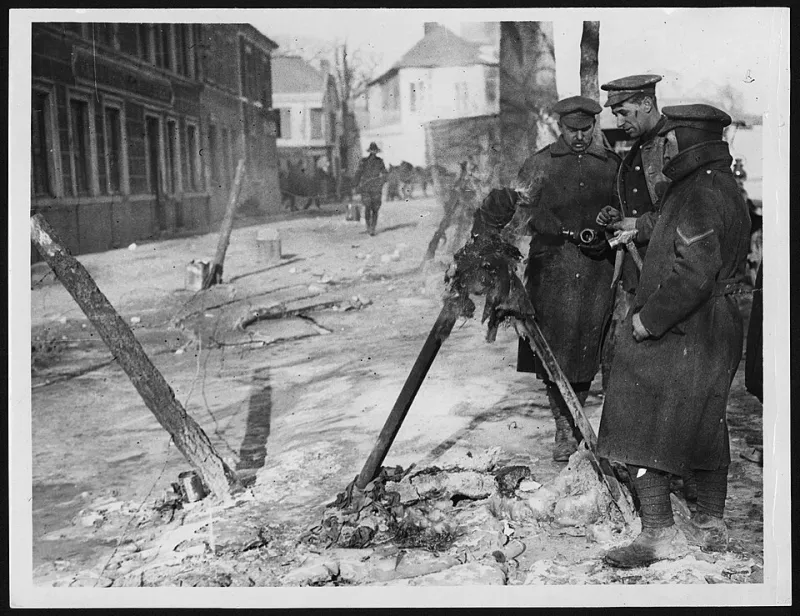
Photo: National Library of Scotland, No restrictions, via Wikimedia Commons
Canadian fantasy writers have never shied away from water as symbol. Our fiction brims with ferry crossings, lake monsters, portals beneath the surface, and doorways that open onto other worlds at the waterline. But there is a curious silence at the centre of all this aqueous imagery, and it is the silence of the tap that doesn't run on a February morning.
We write beautifully about water in its grand moods — the storm, the lake, the crossing — and almost never about water as a utility. This is an odd omission for a national literature that grew up, quite literally, beside the world's largest freshwater reserves.
The Great Unwritten Burden
Consider what water actually means in Canadian life. It means a well that runs shallow in August. It means wrapping the pipes before the first hard frost and holding your breath until spring. It means a cistern in a rural farmhouse, a septic bed that must not be driven over, a water bill that arrives with the casual menace of all municipal correspondence.
Fantasy fiction, as a genre, is famously attentive to logistics when it suits it. We get lovingly detailed accounts of sword-forging, horse-feeding, and candle-making. Yet the hero's quest almost never pauses so the protagonist can thaw a frozen pump or negotiate with a well-witch about the water table. The mundane utility of water — the thing that structures more daily Canadian life than any dragon — simply vanishes from the page.
Why Writers Avoid the Kitchen Sink
Part of the reason is tonal. Domestic water feels too ordinary, too embarrassingly contemporary. A lake can be a threshold; a hot water tank is just a bill waiting to arrive. Writers fear that the moment their hero worries about plumbing, the spell breaks.
But this fear mistakes realism for anti-magic. In truth, the mundane is where Canadian fantasy has always done its finest work. Our strongest traditions place the otherworldly not in distant kingdoms but in backyards, ravines, and farmhouse kitchens. A frozen tap is not a failure of wonder. It is a fact of northern life, and facts of northern life are precisely the material our literature is made of.
There is also, perhaps, a subtler avoidance at work. Water-as-utility reminds us of dependency — on infrastructure, on hydro, on seasons we do not control. Fantasy prefers characters who are free. But Canadian life is a long negotiation with dependency, and a fiction that admits this will feel truer than one that does not.
The Case for the Well-Witch
Imagine, then, the stories we might tell. A young healer in a northern village whose apprenticeship depends on knowing which springs never freeze. A wizard whose power is metered, billed, and occasionally cut off for non-payment. A portal that opens only when the well is full — or only when it runs dry.
The well, in particular, deserves rehabilitation. Older than the lake, more intimate than the river, the well is water made personal: a source you own, maintain, and worry over. Folklore has always known this, peopling wells with spirits and wishes. Canadian fantasy, of all literatures, should understand that the well is not a quaint relic but a live memory for anyone raised outside the city limits.
Even winter itself — so central to our national literary identity — is ultimately a story about water. Ice is simply water that has stopped cooperating. A fantasy that takes frozen pipes seriously is a fantasy that takes the Canadian winter seriously, not as scenery but as an active participant in domestic life.
Toward a Wetter Fiction
None of this argues for turning fantasy into a plumbing manual. It argues for a fuller realism of place. The writers we most admire — those who root the marvellous in the ordinary — understood that magic gains power when it shares space with the everyday. A spell cast in a kitchen with a tempering tap is more persuasive than one cast in a void.
So here is a modest proposal for the next generation of Canadian fantasy writers: let your characters carry water. Let them dread the February thaw that reveals which pipes burst. Let the otherworld have a water table, and let the crossing cost something more than courage.
The lakes and portals will still be there. But around them, a richer story waits — one where the truest magic in a northern country might just be water that runs, warm and reliable, on the coldest morning of the year.