The Ferryman's Witness: In Defence of Fantasy's Smallest Roles
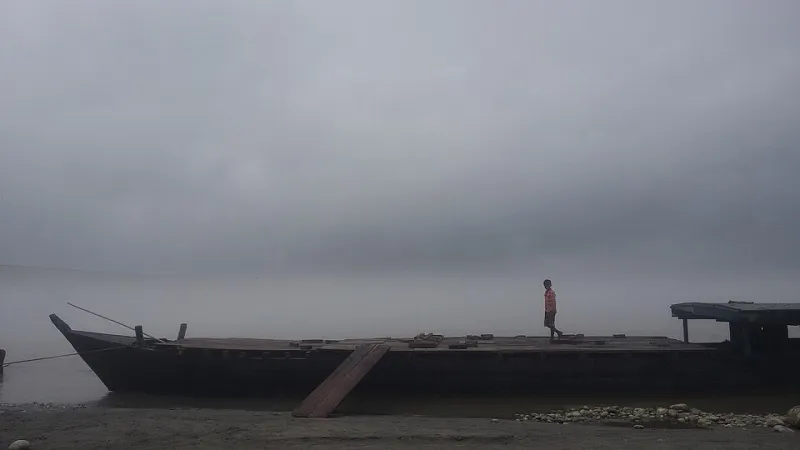
Photo: Abhinav Kumar, CC BY-SA 4.0, via Wikimedia Commons
There is a moment familiar to anyone who has read widely in fantasy: the hero arrives in a village, asks a question or two, and moves on. The villagers who answered — the woman mending nets, the boy holding the lantern, the old man who mutters about the weather turning strange — are never seen again. The narrative forgets them.
I would argue we should not.
The Weight of the Margins
Canadian fiction has long been accused, by critics elsewhere, of understatement. Our novels rarely announce themselves. They prefer the small gesture to the grand declaration, the paused conversation to the battle cry. When that sensibility migrates into fantasy — a genre built on spectacle — something interesting happens. The spectacle recedes, and the people standing at its edges come into focus.
Consider the secondary cast in Alison Baird's novels. The trekkers and traders, the neighbours in Trellis's world who sense that something is wrong without being able to name it — these figures are not decoration. They are the load-bearing walls of believability. A portal to another world only terrifies if the ordinary world on this side feels real, and ordinary worlds are made of shopkeepers, not chosen ones.
What Readers Remember
I spoke with several readers at a recent event in Ottawa, and the pattern in their answers was striking. Few led with the protagonist. One woman, a retired schoolteacher from Kingston, described a minor character from a Baird novel — a woman who runs a small shop and says almost nothing — as the figure that stayed with her for years. "She believed the girl," the reader said. "That was the whole story, really. Somebody ordinary chose to believe."
Another reader, a ferry worker on the Rideau, put it more bluntly: "Heroes get the quest. The rest of us get the consequences." He was joking, but not entirely. In Canadian fantasy, the consequences tend to be the point.
Restraint as Craft
There is a practical argument here as well. Casting restraint — the deliberate decision not to promote every background figure into a backstory — is often mistaken for laziness. It is anything but. To write a ferryman in three sentences and have him linger in a reader's memory requires knowing far more about him than the three sentences contain. The iceberg discipline that Hemingway made famous applies doubly to fantasy, where the temptation to explain is constant.
Baird's fiction exemplifies this. Her secondary characters are sketched with just enough specificity — a habit of speech, a hesitation, a suspicion voiced at the wrong moment — to suggest interior lives continuing off the page. The neighbour who suspects too much is not a plot device; she is a person whose sleep is being ruined by what she has seen. The genre usually asks us to follow the person who crossed the threshold. The Canadian mode asks us to spare a thought for the person who watched it happen.
A Case for the Companion Volume
Could these figures carry their own stories? Occasionally, and when it works, it works because the writer resists inflating them. A novella about the ferryman who has carried a hundred strange passengers and finally asks one of them a question — that is not a lesser fantasy. It may be the purest form the genre offers us here: low stakes in cosmic terms, enormous stakes in human ones.
Not every background character needs promoting, of course. Part of their power lies in their elusiveness. But the argument for their centrality stands regardless. Fantasy asks us to believe in impossible things. The quiet service performed by the shopkeeper, the ferryman, the watchful neighbour is that they make belief possible. They are the witnesses whose testimony the whole edifice rests upon.
The next time a hero passes through your reading life, look past them for a moment. Someone in that village is watching them go, and wondering what happens now. That someone, I would suggest, is where the real story lives.