Seed Catalogues and Second Worlds: How Botany Rooted Itself in Canadian Fantasy
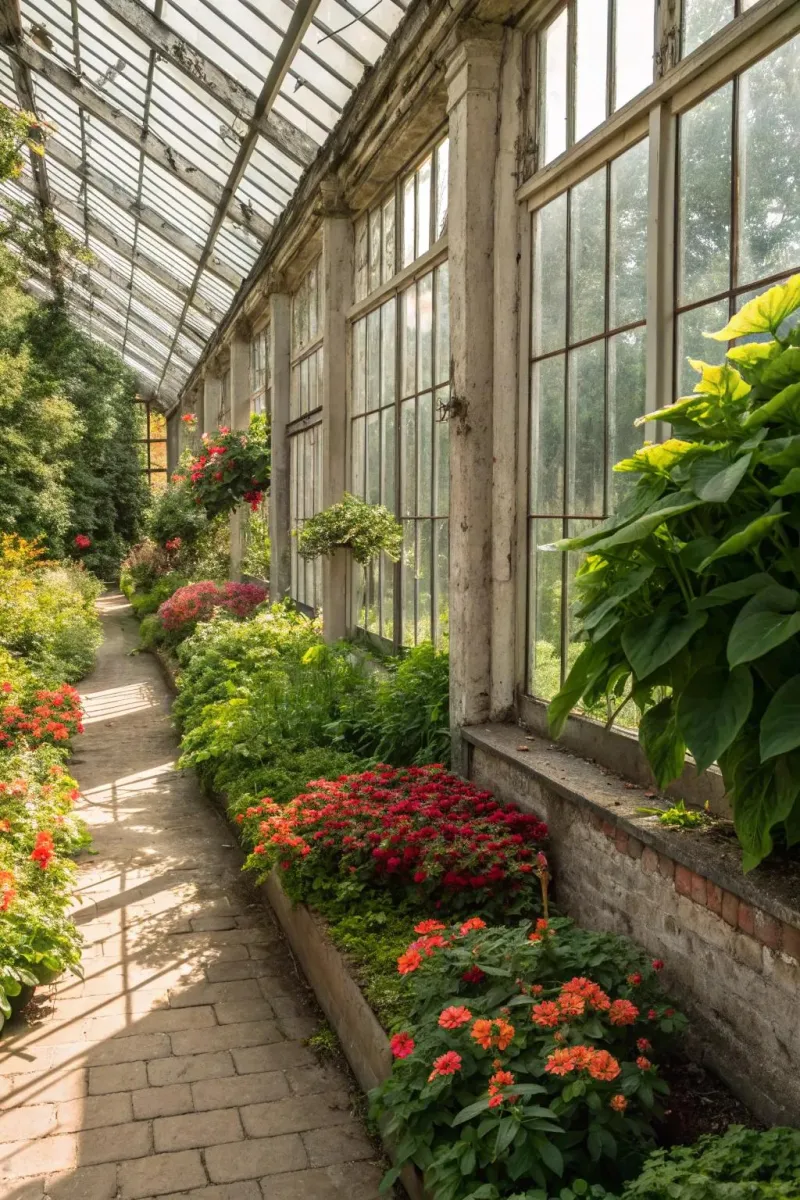
Photo: greenhouse interior fogged glass windows winter garden plants, via www.garden.eco
There is a particular kind of quiet that settles over a Canadian garden in late September. The tomatoes are finished, the dahlias are holding on, and somewhere near the fence line a single aster is doing its patient work. It is precisely in this hush — between harvest and first frost — that so much Canadian fantasy chooses to begin its spells.
Look closely at the tradition and a pattern emerges: the magic is rarely in the sword or the tower. It is in the growing things. A greenhouse whose panes fog over at the wrong hour. A seed packet labelled in a language nobody admits to reading. A boreal orchid that blooms once a decade and opens, briefly, a road somewhere else. Northern writers, it seems, root their otherworlds in soil.
The Glasshouse as Threshold
Consider the greenhouse itself, that most Canadian of structures — a fragile bubble of warmth defying a hostile climate. It is practically a metaphor asking to be used: a controlled pocket of another season, another world, standing in the backyard while the snow piles up outside. In fiction, the glasshouse becomes a liminal chamber, a place where the rules of the northern garden are suspended and something older can take root. Step through the door in January and you cross more than a threshold of temperature; you cross a border of possibility.
This is distinct from the English tradition, where the garden is often an inherited, ordered estate. In Canadian writing, the garden is an argument with the landscape — a negotiated truce with boreal forest, thin soil, and a growing season that feels borrowed. Magic that grows here must be hardy. It must survive -30. It must come back.
Flora of the Far North
The boreal forest offers its own pharmacopoeia of the strange: club mosses older than the provinces, pitcher plants digesting insects in boggy silence, Indian pipe rising ghost-white where nothing else will. Fantasy writers have noticed. Enchanted flora in Canadian fiction tends to be austere and watchful — lichen that records what it touches, fungi that carry messages underground the way the real mycelial networks actually do. The truth of northern botany is already half-marvellous; the novelist merely finishes the sentence.
There is also something deeply democratic in botanical magic. Anyone can plant a seed. The gate does not require a bloodline or a prophecy — only patience, attention, and a willingness to be surprised by what comes up.
What Gardeners Know
Talk to gardeners who read fantasy, and the overlap stops being a metaphor. "People think I'm weeding," one Ottawa allotment gardener told me, "but half the time I'm mapping. You learn a plot the way you learn a fictional world — where the shade falls, what the soil remembers." Another, in the Annapolis Valley, described her perennial beds as "a slow spell cast over three years," and could not understand why anyone found that fanciful.
Readers, too, report the phenomenon from the other side. A common confession on gardening forums and in bookstore conversations alike: a beloved novel sent them out to plant something. Not the rose of legend, but something local, something that would actually survive Zone 4. The fiction does not transport readers away so much as it sends them home by a different door.
Why the North Grows Its Magic Slowly
Perhaps the deepest reason is temporal. A Canadian growing season teaches a specific relationship with time: nothing is instant, everything is deferred, and hope is a practice rather than a feeling. Fantasy built on botany inherits that rhythm. Enchantments take seasons. Portals open on their own schedule, like the trilliums, like the lilacs. In a literary culture increasingly impatient for the next instalment, the garden insists on a counterargument — that some worlds, like some roots, need the whole winter underground before they show.
So this autumn, as you rip out the bean stalks and mulch the beds for sleep, consider the possibility that you are not closing the garden. You are, at worst, closing a chapter. The best Canadian fantasy has always suspected as much: under the snow, under the soil, under the fogged glass of the greenhouse, something green is waiting for the right reader to notice.