Next Door to Elsewhere: The Case for the Suburban Street in Canadian Fantasy
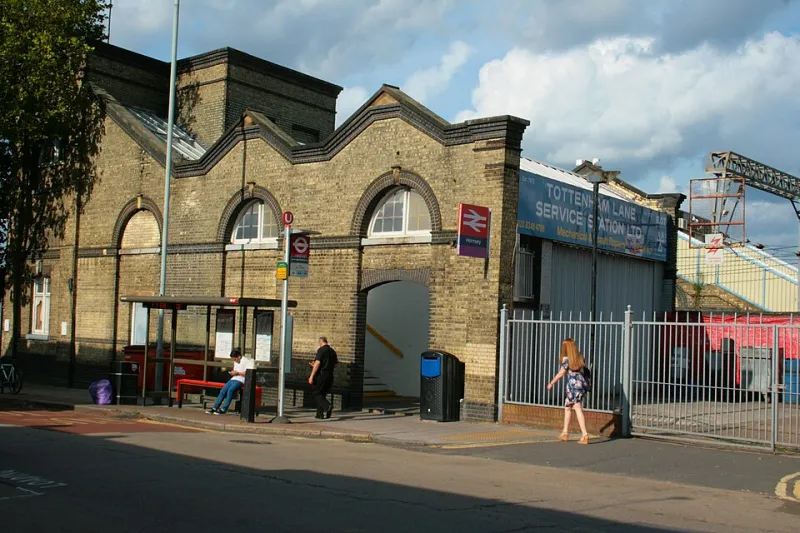
Photo: Roger Carvell, CC BY 3.0, via Wikimedia Commons
There is a persistent assumption, among readers and reviewers alike, that fantasy requires scale. Kingdoms must fall; dark lords must rise; maps must sprawl across endpapers with mountain ranges and disputed borders. And yet the fantasy that has always felt most honest to me — the fantasy this country produces best — rarely bothers with any of that. It happens on a cul-de-sac. It happens in the house with the recycled blue bin at the end of the drive, two doors down from the neighbour nobody quite trusts.
The Case Against the Grand Arena
High fantasy, for all its pleasures, asks us to believe in a world built for spectacle. Its cities exist to be besieged; its forests exist to be quested through. There is nothing wrong with this — but it is a borrowed mythology, one imported largely from British and American traditions that had empires to memorialize.
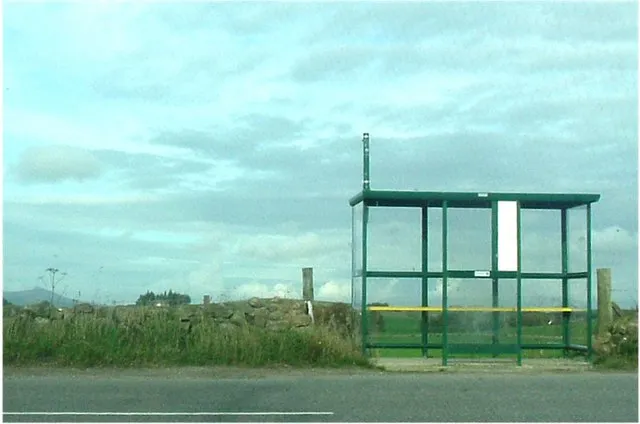
Canadian fantasy has never had the same appetite for thrones. Perhaps because our history is one of settlement rather than conquest's centre, our writers instinctively understand that the uncanny does not announce itself with trumpets. It slips in through the garage door left open. It waits by the bus stop on a street where nothing has changed since 1987.
The Magic of the Ordinary Address
Consider what a suburban setting actually offers a writer of the fantastic. It offers sameness — and sameness is the perfect canvas for disruption. When every house on the street is built from the same plan, a single window glowing at the wrong hour becomes an event. When the neighbourhood has no history anyone speaks of, the absence itself becomes a door.
This is why the subdivision, so often maligned as a literary dead zone, is in fact a stage of extraordinary tension. The ordinary is not the opposite of wonder; it is wonder's camouflage. The most chilling and most beautiful moments in fantasy depend on contrast, and nothing contrasts with the otherworld quite like a lawn sprinkler ticking across the grass at dusk.
A Distinctly Northern Register
There is something else at work here, too — something specifically Canadian. Our version of the everyday is shaped by distance, by long winters, by the polite reserve of neighbours who notice everything and say nothing. A magical encounter on a Toronto side street carries a different charge than one in a Manhattan alley or a London fog. It is quieter. It is more watchful. It assumes, correctly, that the strangest thing in Canada is not the monster but the fact that no one has mentioned it.
Writers across the country have worked this seam with great skill: the new subdivision built over old ground, the townhouse complex whose basement shares a wall with somewhere else entirely. The genius of these stories is that the fantastic never has to travel far. It is, quite literally, next door.
In Defence of the Small Stage
I would argue that the refusal of grand arenas is not a limitation of Canadian fantasy but its signature strength. Anyone can raise an army. It takes considerably more nerve to make a reader care about what happens in the neighbour's garden after dark — to suggest that the whole weight of the otherworld might rest on a fence line, a shared driveway, an awkward conversation over the hedge.
The cul-de-sac, after all, is a shape with no exit except the way you came in. Any fantasy writer worth their salt should be able to do something with that.