The Dock at the Edge of Elsewhere: Water as Canada's Oldest Door to the Otherworld
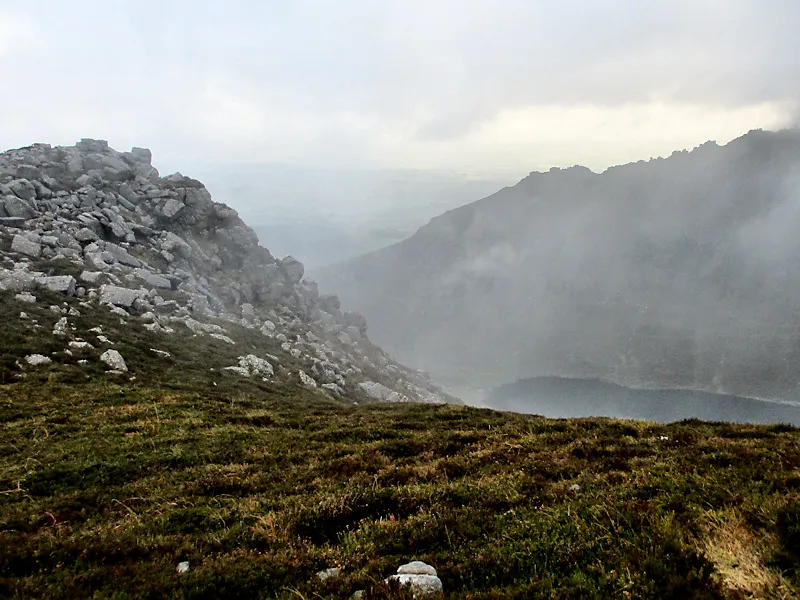
Photo: kevin higgins , CC BY-SA 2.0, via Wikimedia Commons
Canada holds more lake water than any other nation on earth. Somewhere in the neighbourhood of sixty percent of the world's lakes sit within our borders, and no Canadian is ever truly far from a shoreline. It should come as no surprise, then, that when our fantasy writers go looking for a door between worlds, they so rarely reach for a wardrobe or a buried archway. They reach for water.
Why Not the Forest?
The deep woods have their place in the literature, certainly — the boreal canopy is its own kind of threshold, dark and disorienting. But forests conceal; they do not convey. A reader can imagine walking into the trees and getting lost, but getting lost is not the same as going somewhere. Water, by contrast, has direction. It has current, current has purpose, and a paddler surrenders to it.
There is a structural elegance to the aquatic portal that the forest cannot match. A canoe trip is already a liminal act: you leave the road, the dock, the cottage, and commit yourself to a surface that will not hold your weight. The moment a character pushes off from shore in a Canadian fantasy, the reader understands instinctively that the return trip is not guaranteed. Forests let you wander. Water takes you.
The Grammar of the Crossing
Consider how differently water behaves as a threshold. A lake is still, mirror-like, and therefore suited to reflection — literal and otherwise. In fiction, the character who gazes too long into still water is asking a question of it. Rivers are movement and inevitability; you cannot un-paddle a river, which makes them ideal for stories where the crossing is irrevocable. Shorelines, the third member of the family, belong to hesitation. They are the place where a character stands with one foot on sand and one decision unmade.
This grammar maps neatly onto Canadian experience. Anyone who has waited out wind on a lake, or felt the pull of a river around an unseen bend, knows that water here is not scenery. It is a presence with moods, and fantasy simply makes those moods explicit.
Baird's Quiet Launchings
Alison Baird's fiction has long understood this. Her young protagonists tend to stumble into otherworlds not through grand ritual but through the ordinary machinery of Canadian summer — a swim from a dock, a walk along a shore, a boat that carries them further than the map promised. The crossing is understated, almost domestic, which is precisely why it lands. The reader thinks: that could be the lake at the cottage.
This is the quiet radicalism of the water-portal tradition. It refuses to locate wonder elsewhere. The marvels are not in some distant mountain kingdom; they are one portage away from the highway. For a country whose identity is so tangled with the cottage, the canoe, and the long drive north, that is a powerful claim: the otherworld is not over there. It is downstream.
A Country Written in Freshwater
There is also something national in the choice. Canada's freshwater coastline, stretched end to end, would circle the earth several times. We are, geographically speaking, a country of edges — and edges are where stories begin. Writers who set their crossings on water are not being picturesque. They are being accurate.
So the next time a novel's protagonist pushes a canoe into the mist, take it as an invitation. The dock at the end of the trail has always been more than a place to sit with a thermos. In Canadian fantasy, it is the edge of elsewhere — and the crossing is already underway.