Compost, Cold Frames, and the Credibility of Spells: What Rural Life Teaches Fantasy Writers
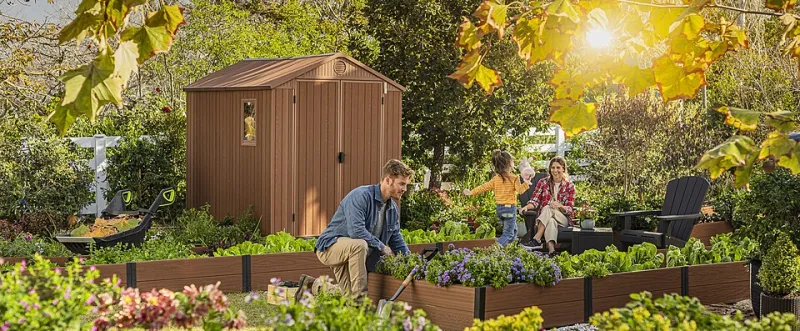
Photo: Keter68, CC BY-SA 4.0, via Wikimedia Commons
There is a particular kind of knowledge that cannot be faked on the page: the weight of a full watering can at the end of August, the specific panic of a late frost warning, the way a hen regards a human who has arrived late with the feed pail. A growing number of Canadian fantasy writers possess this knowledge firsthand, and their fiction is better for it.
The argument of this piece is a simple one, and it is not that authors must farm to write fantasy. It is that the texture of rural labour — its delays, its dependencies, its refusal to obey schedules — produces magic systems with a credibility no amount of internal logic can supply on its own.
Magic That Has a Growing Season
Consider what a garden actually demands. Preparation in one season for harvest in another. Attention distributed unevenly across months. Failure that arrives without explanation and success that arrives the same way. When a novelist imports these rhythms into a magic system — spells that must be sown in spring, enchantments that ripen slowly, power that fails in a dry year — the reader does not need a diagram to believe it. The reader has, at some level, lived it or watched a grandparent live it.
An Ontario author who raises market vegetables near Guelph, and who asked not to be named so as to keep her two careers politely separate, put it bluntly: "Nobody on a farm believes in instant results. If your wizard can fix anything with a word, I don't trust him. My carrots don't obey a word. Why would the weather?"
Her current manuscript features hedge-magic that works only within sight of the land that produced its components — a constraint she traces directly to the seed-swap culture of her region, where a tomato variety is only as good as the soil it came from.
Livestock and the Ethics of Dependence
British Columbia's small-holding writers describe a different lesson: care that cannot be delegated or deferred. Animals require tending on the day they require it, in the weather that day provides. One Vancouver Island novelist, who keeps a small flock of sheep alongside a writing practice, notes that her fictional animal-speakers are defined less by their gifts than by their obligations.
"The magic in my books is a chore," she says, without complaint. "Somebody has to be there. Every morning. That's the rule, and it does more world-building than a hundred pages of lore."
This is the quiet contribution of the hobby farm to fantasy literature: an ethic of dependency. Characters with power are also characters with duties, and the duties are boring, physical, and non-negotiable. Readers of Canadian fantasy have long responded to precisely this quality — the sense that the otherworld is not a theme park but a neighbour, with needs of its own.
Seed Swaps as Secret Societies
There is also a social dimension. Seed libraries and swaps — thriving across the Prairies, the Maritimes, and rural Ontario — are informal networks governed by trust, memory, and generosity. Varieties pass hand to hand with stories attached: which grandmother grew them, which fence line they favour, which year nearly finished them off.
It requires little imagination to see why this maps so naturally onto the transmission of folk magic in fiction. The knowledge is local, embodied, and slightly guarded. It is not written down because writing it down would miss the point. Several of the authors interviewed for this piece described learning "how things work" — in both gardens and manuscripts — from older neighbours whose instructions were half practical and half legend, and whose tone they now recognise in their own fictional mentors.
The Cold Frame as Portal
Canadian readers will forgive a final observation. The cold frame — that modest glass-topped box extending the season at both ends — is among the most quietly magical objects in rural life. It creates, in effect, a small elsewhere: a pocket of different weather, governed by human attention, holding back the winter that governs everything beyond its lid.
Writers who tend such structures report an almost irresistible pull toward threshold imagery in their work. Whether the garden inspired the portal or the portal was always waiting in the garden is a question this publication has explored before, and will not resolve here. What is clear is that the hands know something the outline does not: that magic, to be believed, must first be weeded.