Below the Bungalows: Toronto's Ravines and the Portal Geography of Canadian Fantasy
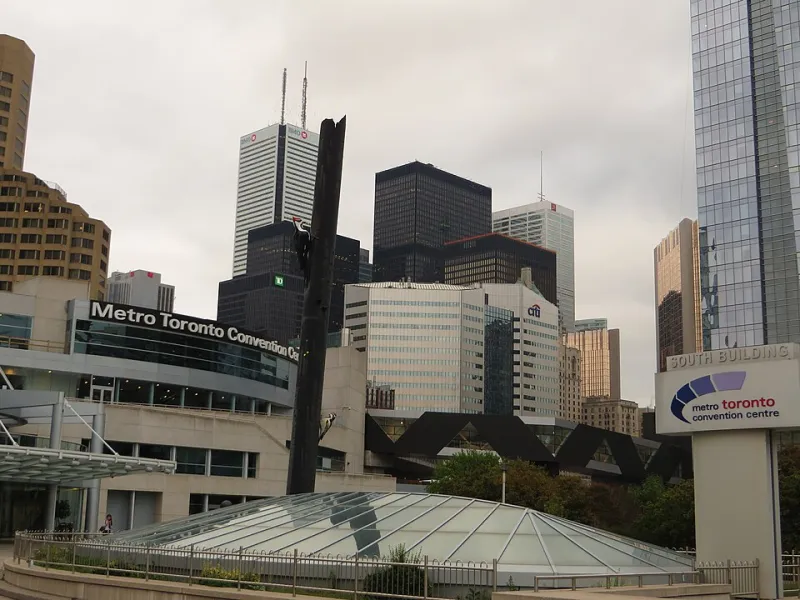
Photo: Ken Lund from Reno, Nevada, USA, CC BY-SA 2.0, via Wikimedia Commons
Every Torontonian knows the sensation. You step off a residential street in Leaside or Riverdale, push through a screen of sumach and buckthorn, and within twenty paces the city has vanished. The traffic noise flattens into something like wind. The ravine floor opens ahead of you, dappled and dim, and for a moment you are nowhere at all — or, more precisely, somewhere that has never been fully claimed by either the metropolis above or the wilderness it displaced.
It is precisely this quality that has made Toronto's ravine system one of the most quietly influential landscapes in Canadian fantasy writing. The network stretches roughly 160 kilometres, threading beneath and between the city's neighbourhoods like the seams of a garment. Novels have been set on its slopes and footpaths for decades, and the reasons why say a great deal about how Canadian fantasy imagines the boundary between worlds.
A Landscape of the In-Between
Fantasy has always depended on thresholds — wardrobes, rings of stones, station platforms. But the ravine offers something more architecturally interesting than a single door. It is a threshold you can live beside. A house on Bloor Street and a house on a ravine lot may sit a ten-minute walk apart, yet belong to entirely different emotional geographies.
"The ravine is a liminal space in the strictest sense," says one urban naturalist who leads walking tours through the Don Valley. "It's protected land that most people never enter. You can live in Toronto your whole life and never see the bottom of a ravine. That invisibility is exactly what makes it mythically charged."
Unlike the wilderness of the Group of Seven imagination — vast, distant, requiring a car and a holiday — the ravine is wilderness with a commute. It permits the classic fantasy maneuver of the ordinary person encountering the extraordinary without ever leaving their postal code.
Why Writers Keep Descending
Authors who set work in the ravines tend to describe a similar attraction: the sense that the city has only a provisional claim on the land. Toronto's ravines were largely left unbuilt because of flood risks and early conservation planning, which means they remain, in effect, an argument the city once had with itself about what it wanted to be. That unresolved quality — land that was too dangerous to develop and too much itself to pave — reads on the page as permission. Anything might still happen down there.
There is also a matter of scale. Canadian fantasy has often been accused, fairly or not, of preferring the wide horizon to the narrow street. The ravines reconcile the two. A writer can stage an encounter with the otherworldly a block from a school bus stop, and the proximity is the point. The mundane and the marvellous are not separated by geography; they are separated by a slope and a stand of cottonwoods.
Reading the Ravines: A Walking Guide
For readers inclined to test these ideas on foot, the city offers any number of suitable routes. None requires more than a paperback, sturdy shoes, and a willingness to descend.
The Don Valley at Todmorden Mills. Where the old mill buildings sit against the river, the layering of eras — industry, forest, recovery — is at its most visible. Ideal for readers drawn to fiction in which the past refuses to stay buried.
High Park's Grenadier Ravine. Quieter than the park's lawns above, this wooded corridor is a study in how quickly the city's soundscape dissolves. Bring a novel with a slow-building sense of unease.
The Burke Gilman of the west end: Etienne Brûlé Park and the Humber. The river's Indigenous history long predates the city, and walking its banks it is impossible not to feel that. Readers should approach with the respect such deep time demands.
Mud Creek and the ravines of Leaside and Rosedale. These smaller corridors demonstrate the ravine system's real strangeness: a green alley between two rows of garages, a flight of stairs descending from a sidewalk into what feels like another century.
A word of practical caution belongs here as well. The ravines are living ecosystems, and the courtesy owed them is real: stay on marked trails, carry out what you carry in, and remember that the wildlife you may glimpse — deer, foxes, the occasional coyote — are residents rather than attractions.
The Corridor as Argument
What the ravines ultimately offer Canadian fantasy is a setting that argues against a false choice. Neither fully urban nor fully wild, they insist that the two have always coexisted here, uneasily and productively. That is a claim with deep roots in the national imagination, from the bush stories of the nineteenth century to the contemporary novels that send their protagonists down a ravine stair and into trouble.
It is tempting to call the ravines Toronto's best-kept secret, but the phrase flatters the city and insults the landscape. The ravines have never been secret. They have simply been waiting, in the manner of all good thresholds, for someone to notice the door was already open.