Between the Print Runs: A Collector's Field Guide to First Editions of Canadian Fantasy
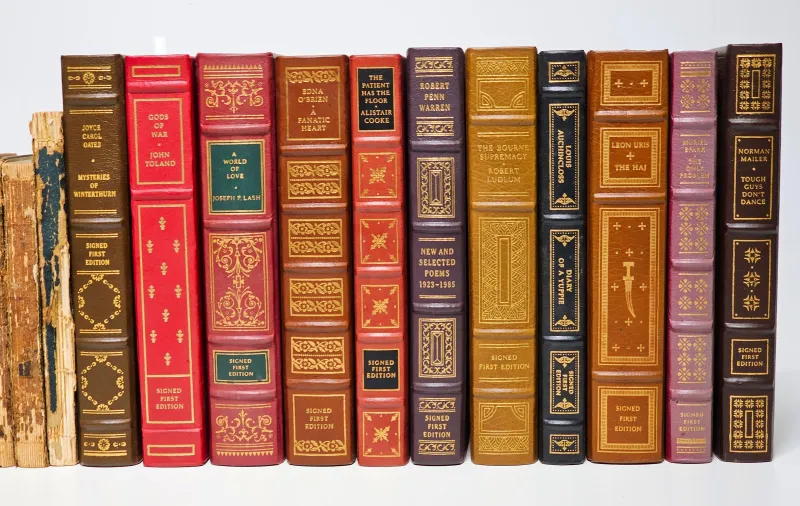
Photo: vintage bookshelf first edition hardcover books collection, via image.invaluable.com
Collecting Canadian fantasy is not a hobby of abundance. Unlike the vast print runs of internationally bestselling series, the books at the heart of this field were often produced in modest quantities by small presses scattered across the country — houses that published a handful of titles before folding, merging, or moving on. For the collector, this scarcity is not an obstacle. It is the point.
Why Small Presses Matter
Much of Canada's fantasy literature reached readers through small and regional publishers: literary presses in Ontario and Quebec, genre-focused imprints on the Prairies, and independent houses in Atlantic Canada. These publishers took chances on imagined worlds when larger firms would not. Their print runs — sometimes only a few hundred copies — were frequently never reprinted.
This history has two consequences. First, genuine first editions of significant Canadian fantasy can be genuinely rare, and often affordable in a way that first editions of their American and British counterparts are not. Second, the physical book itself is a document of Canadian publishing heritage: the cover art, the paper stock, even the printer's imprint on the copyright page tell a story about how our genre came to exist at all.
Identifying a First Edition
A few practical habits will serve any collector well:
- Read the copyright page. Look for a number line; a "1" in the sequence indicates a first printing. Canadian small presses did not always use number lines, so absence of one is not disqualifying — but presence of one, ending in 1, is strong evidence.
- Check the publisher and city. Canadian fantasy was often published simultaneously in different countries or editions. The Canadian printing, with a Canadian publisher's imprint and city of publication, is typically the most desirable for collectors in this country.
- Note the date. A publisher listed with two dates — the original publication year and the printing year — signals a later printing unless the two match.
- Handle the object. Later printings sometimes show changes: corrected errors, new cover art, or a different price in Canadian dollars. Catalogue raisonné-style research, even informal notes kept by fan communities, can reveal which details belong to which printing.
- Condition counts, but provenance counts more. A well-loved first edition with a meaningful inscription often outvalues a pristine copy with no story attached.
Where Signed Copies Are Found
Canada's convention circuit is the collector's best ally. Events in Toronto, Vancouver, Ottawa, Montreal, and Winnipeg regularly host fantasy authors, and many sign stock brought by booksellers on site. Smaller genre gatherings — and the readings hosted by independent bookshops from St. John's to Victoria — offer the best odds of a personal inscription rather than a signature alone.
A few field notes: independent booksellers are often the keepers of signed stock from past events, and a polite inquiry can uncover copies never listed online. Author events at libraries and universities, particularly around new releases, frequently include sales tables. And when a beloved small press closes, its remaining inventory is sometimes dispersed to booksellers — an occasion that has quietly created many of the finest Canadian fantasy collections in private hands.
Building a Shelf Worth Keeping
New collectors sometimes ask where to begin. The honest answer: begin with what you love. A collection assembled around books you have actually read — first editions of novels that shaped you, signed at a convention you attended — will always be more satisfying than one assembled by rarity alone.
That said, a few structural suggestions. Consider organising by publisher rather than author; the history of a small press, traced across its titles, is one of the most rewarding collecting threads in Canadian fantasy. Keep records of where and when each copy was acquired. Store books away from direct sunlight and humidity — a real concern in Canadian homes with long heating seasons.
Heritage, Not Just Value
It is tempting to speak of collecting in the language of investment. But the deeper reward is custodial. Every first edition of a Canadian fantasy novel preserved in good condition is a physical artefact of a literary culture that grew in the margins — sustained by small presses, independent booksellers, and readers who wanted imagined worlds that reflected their own landscapes.
The print runs were small. The worlds were not. Collect accordingly.