Trellis, Kai, and the Country Between: Tracing the Geography of Alison Baird's Fiction
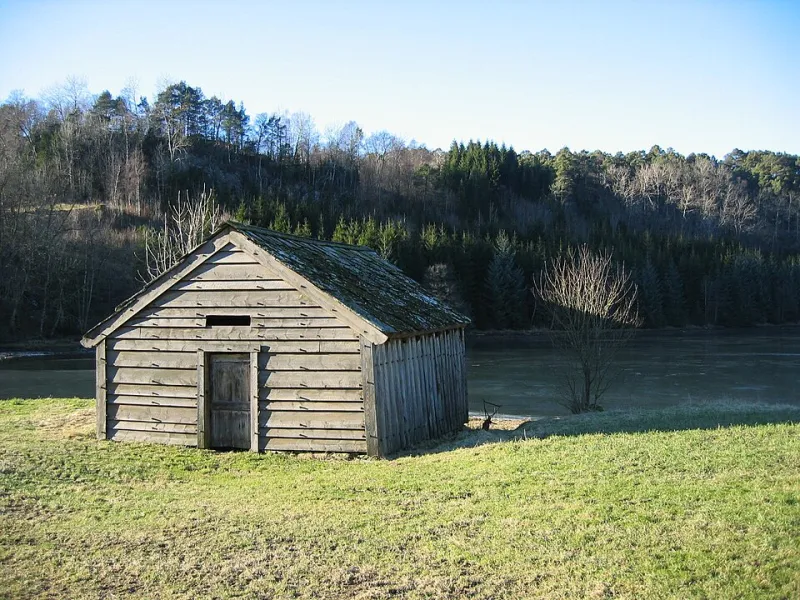
Photo: Gilbert Anthony Pownall, Public domain, via Wikimedia Commons
Readers who come to Alison Baird's work through a single novel often discover, a few books later, that they have been wandering through an interconnected world all along. Her fantasy settings are not sequels in the conventional sense so much as neighbouring territories on the same inner map — distinct in tone and era, yet linked by shared history, recurring beings, and a sensibility that is unmistakably her own.
One Imagination, Many Territories
Baird's bibliography resists tidy sorting, which is part of its charm. The Hidden Dragon introduces readers to a realm where dragons are not mere monsters but ancient intelligences with their own claims on the world. The Trellis sequence, by contrast, unfolds in a setting shaped by seafaring, exile, and the slow erosion of old powers. The Kai books reach further afield, into cultures and coastlines that feel dreamlike precisely because they obey their own logic rather than ours.
What unites them is less a single continuity than a set of persistent preoccupations: the sea as threshold, the past as a living presence, and magic that operates more like weather or tide than like a system to be mastered. Readers expecting the rigid rule-sets of epic fantasy will find something stranger and, arguably, more truthful — enchantment that behaves the way memory behaves.
Where to Begin: A Sensible Reading Order
Because the novels can be read independently, there is no single correct entry point. Still, readers who prefer a considered path might try the following:
- The Hidden Dragon — the most accessible introduction to Baird's dragons and her gift for character.
- The Trellis novels — a fuller immersion in her world-building, best appreciated once her rhythms are familiar.
- The Kai sequence — the most mythic and demanding of her settings, rewarding for readers who have learned to trust her pacing.
Returning readers often reverse this order and find the earlier books newly legible, catching echoes they missed the first time. That re-reading pleasure is itself a hallmark of Baird's fiction.
Recurring Creatures and the Logic of Magic
Dragons are the most obvious through-line, but they are not alone. Baird's worlds are populated by beings who occupy the borderlands between the natural and the supernatural — creatures of lake and forest and shoreline that would be at home in the old tales of the Pacific Northwest or the Atlantic coast alike. Her magic rarely arrives with fanfare; it seeps, it whispers, it arrives in dreams.
This restraint gives her novels a distinctive texture. Wonder in a Baird book is not spectacle but attention — the sudden recognition that the world is larger than the protagonist assumed. It is a quality that Canadian readers, raised on a landscape that dwarfs human ambition, may recognize instinctively.
Themes That Cross the Water
Three themes recur across the settings. The first is displacement: exiles, travellers, and heirs far from home figure in nearly every book. The second is inheritance — of thrones, of debts, of magic, of stories. The third, and perhaps the most Canadian, is reconciliation with the land itself, an acknowledgement that places have their own claims and their own memories.
Taken together, these threads make Baird's collected worlds less a franchise than a country of the mind — one worth entering slowly, and worth returning to.