Before the First Chapter: Inside the Quiet Work of Building a Fantasy World
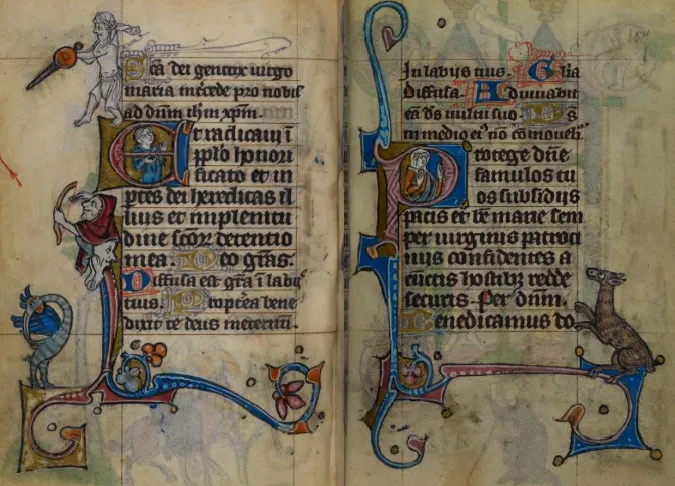
Photo: Unknown miniaturist from Liège-Maastricht area, ca. 1300-1325, Public domain, via Wikimedia Commons
Readers often imagine that a fantasy novel begins with a character or a plot. In truth, it frequently begins with geography. A bay that curves the wrong way. A mountain range that demands a border war. A river that must be crossed, and therefore must have a ferryman, and therefore must have a ferryman's family, and a village, and a reason the village survives the winter.
Worldbuilding is the invisible scaffolding of the genre, and for those of us who write it, the work is equal parts cartography, historiography, and stubborn obsession.
The Map Comes First — Or It Doesn't
There is no single correct way to begin. Some writers draft a map before a word of prose exists; others resist cartography until the story forces their hand. What matters is that the geography behaves consistently. A reader may forgive a plot detour, but they rarely forgive a coastline that relocates between chapters.
In my own process, the map tends to arrive early, though never finished. It is sketched, redrawn, annotated in pencil, and coffee-stained into illegibility. Place names accumulate like sediment — some drawn from Old English roots, some borrowed from the rhythms of Gaelic and Welsh, some simply the sound a landscape seemed to make in my head on a February morning in Toronto.
Glossaries, Timelines, and the Discipline of Consistency
Once geography exists, history insists on following. Who settled this land? Who was displaced? What wars are remembered, and which have been deliberately forgotten? A working timeline — even a rough one — becomes indispensable. So does a glossary of invented terms, because nothing undermines a reader's trust faster than a magical practice called by three different names.
The practical advice is unglamorous: keep a series bible. Record spellings, titles of nobility, lunar calendars, heraldic colours. The file you maintain for your own sanity becomes, incidentally, the guarantee that book four will not contradict book one.
The 90 Percent You Never See
A common pitfall for new writers is the temptation to include everything. The truth is closer to the opposite: most of a built world should remain submerged, like an iceberg in Hudson Bay. The reader senses depth without being lectured on it. A passing reference to an old treaty or a minor saint does more work than three paragraphs of exposition.
Canadian readers, perhaps, understand this instinct intuitively. We live in a country where the land itself carries deep, often difficult history, where place names layer Indigenous, French, and English inheritances over the same ground. That sensibility — that landscape is never neutral — translates naturally into fantasy, where a forest can hold memory the way a shoreline holds tide.
When the World Pushes Back
The final secret of worldbuilding is that the world, once established, begins to make demands. A kingdom with a hereditary monarchy and no standing army will fall to its neighbour, and the story must account for it. Magic with a cost cannot be wielded casually without consequence. The best invented worlds are not wallpaper; they are arguments, and the characters live inside those arguments.
So the next time you open a fantasy novel and linger over the endpaper map, spare a thought for the years of quiet labour behind it — the timelines, the naming lists, the villages that exist only so a ferryman could row someone across a river, once, at dusk.